graceful-drain-controller
Zero-disruption node drains for single-replica Kubernetes Deployments.
The problem
Cluster autoscalers remove nodes all day long. Karpenter consolidates, Cluster Autoscaler scales down, an operator runs kubectl drain — and every one of them ends the same way: taint the node, then evict its pods through the Kubernetes Eviction API.
For a Deployment running replicas: 1, that leaves you two options, and both are bad.
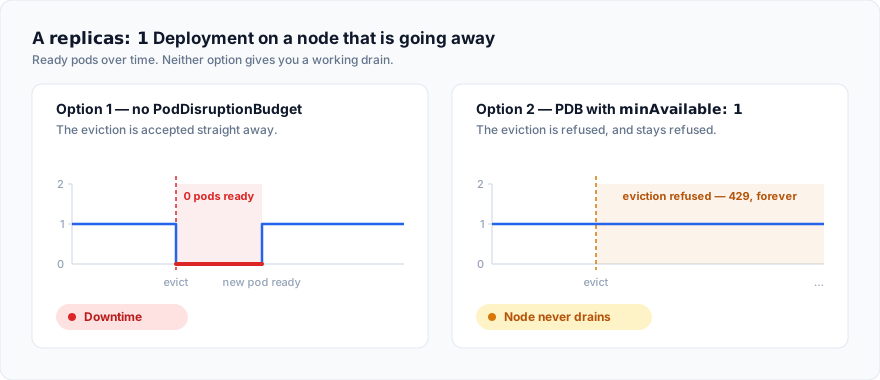
Without a PodDisruptionBudget, the eviction is accepted the moment it arrives. Your only pod disappears, and the service is down until a replacement is scheduled, pulled, started and Ready somewhere else — anywhere from a few seconds to a few minutes.
With a PDB of minAvailable: 1, the eviction is refused instead. But a single-replica Deployment can never satisfy that budget while its only pod is running, so the refusal never lifts. The node stays half-drained until the autoscaler’s patience runs out and it force-deletes the pod — which is the first outcome again, just later and less predictably.
The honest fix is to run two replicas. That is not always possible: leader-elected controllers, singleton workers, licensed software, and anything holding an exclusive lock are genuinely single-instance.
The idea
The disruption exists because the old pod goes away before the new one arrives. So make the eviction wait — not forever, just long enough for a replacement to be up.
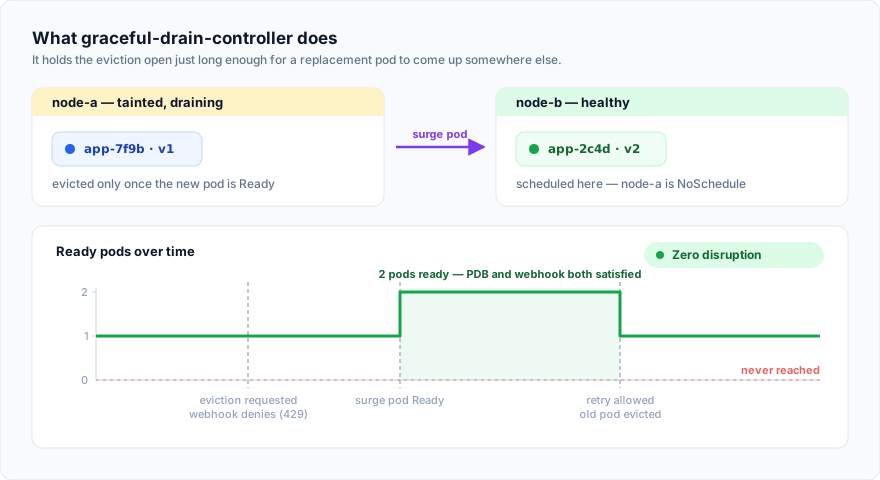
graceful-drain-controller registers a validating admission webhook on pods/eviction. When an eviction arrives for the only pod of a replicas: 1 Deployment, it:
- Denies the eviction with
429 Too Many Requests— the status code every autoscaler already knows how to retry. - Marks the Deployment for a rollout restart, which schedules a surge pod. The draining node is tainted
NoSchedule, so the surge pod lands on a healthy node. - Keeps denying until that pod passes its readiness probe.
- Allows the eviction on the next retry, once two replicas are Ready.
The old pod is evicted, the node drains, the autoscaler terminates it. The replica count went 1 → 2 → 1 and never touched zero.
What you get
- Works with Karpenter, Cluster Autoscaler,
kubectl drain, and anything else that goes through the Eviction API — the controller never looks at nodes or taints, so there is nothing to configure per autoscaler. - No PodDisruptionBudget required. The webhook is the blocking mechanism. (And a
minAvailable: 1PDB is actively harmful here.) - No annotations required by default. Every
replicas: 1Deployment is protected; opt-in mode is available if you want a smaller blast radius. - Fails open. If the controller is unavailable, evictions behave exactly as if it were never installed. A broken controller cannot wedge your cluster.
- Bounded. A rollout that never completes gives up after
rolloutTimeoutand lets the drain proceed, rather than blocking the node indefinitely.
What it does not do
- StatefulSets, DaemonSets and bare pods are ignored. Only Deployments are handled.
replicas: 2and above are ignored — a normal PDB already solves that case correctly.- Direct pod deletion is not intercepted.
kubectl drain --disable-eviction, and an autoscaler’s forceful termination once its own grace period expires, both bypass the Eviction API and therefore this controller. - It cannot create capacity. If there is nowhere to put the surge pod, the rollout stalls and the drain falls back to the timeout.
Next steps
- How it works — the full sequence, the state machine, and the failure modes.
- Installation — prerequisites and Helm install.
- Preparing your workloads — what a protected Deployment must look like.
- Configuration reference — every flag and Helm value.
- Operations — events, logs, troubleshooting.